Sunday, January 11, 2009

Chronicles of my stupid food addictions no. 1: Chestnuts

"And if you have nuts on the wall, are they walnuts?"
"Yes son."
"And if you have nuts on your chest, are they chestnuts?"
"No, son--that means you have a dick in your mouth"
-misquoted from Snoop Dogg's Doggystyle

I don't know why exactly, but when I came to New York I started getting possessed by the notion of eating, and thus of course roasting, chestnuts. I had tried to procure the little buggers in California from an Italian specialty store slash upscale deli with fancy submarine sandwiches, but they were expensive and moldy. Not impressive OR tasty. Plus it never gets cold enough in that part of the country (eastern edge of Los Angeles county) to give you that Jack frost nipping at your nose cozy fireplace feeling.

The first roasted chestnuts I ate were off a hot dog cart somewhere around Moma, in Midtown Manhattan, wanna say high fifties. They cost something like four dollars for a little brown bringing my lunch to school bag. It was the middle of autumn, I think--late October or early Novemeber, around there--and my fingers were just starting to feel cold after being outside a little while. It was the time of year when you first smell football, is the only way I can explain it. Anyway, there was the little bag rolled back to reveal dark brown nuggets that looked like oversized hazelnuts, but puffed out with their nutmeat (always wanted to use that word in an entry) beckoning forth from the cracked open hull. They looked like little molting eyeballs. They looked delicious.

My greedy semi-numb fingers rooted around in the bag and thawed in the steam. I plucked one out, popped it open, and rolled into my hand something that resembled a shrunked baboon brain: this dark brown wrinkly thing. Oh well, I still had the fancy song dancing in my head and was feeling so "right" for the season, so I soldiered on and ate the thing. Or tried to. Really, really gross--kind of like eating a burnt dried out sponge. Not just dry, but drying--I could actually feel my saliva being sucked out of my mouth trying to digest this thing.

Somehow this experience enchanted me, probably because I got one that hadn't been vulcanized, and I needed more instantly. Lots of things surprised me when I ate a non-nasty chestnut. One, they're mushy, not crunchy. The texture of chestnuts is a lot like baked potato, and the whole thing is more starch than protein (turns out chestnuts aren't really nuts at all, but whatever). Two, they taste vaguely like sweet potatoes, kind of mellow and roundly sweet, so you can treat them like a root vegetable rather than you would a nut in cooking. Three, they can be an absolute /bitch/ to peel if you don't roast them perfectly.

I've tried to roast chestnuts in about eight thousand different ways, including the Bing Crosby-approved method of on an open fire (I wrapped them up in tinfoil and stashed them inside an old woodstove in a cabin up in the woods of upstate NY. It didn't work--burnt the shit out of them), and have done it more wrong than right. But I think I've finally go the hang of it, and wanted to share on the off-chance you too found yourself with a hankering or sudden unexpected surplus of raw chestnuts. Side-note: this was more likely to happen a hundred years ago in America, where tons and tons of native chestnut trees used to flourish from Maine to the Midwest. But then a massive blight took em out in the early 1900s, and mostly our supply is now imported from Italy.

The trick to roasting chestnuts well is avoiding drying them out. Dried out chestnuts taste like ass, which I know I've already covered but want to confirm and kind of cathartically release. The best way to keep from drying them out is making sure the heat's not too high on the one hand and there's plenty of moisture for them to suck up on other other. Use a cookie sheet or jelly roll pan or whatever you call it and pour enough water in there to keep the chestnut bottoms wet. It all dries up in the oven soon anyway, so don't be skimpy. Then, with the heat, don't go above 350 degrees, otherwise they'll turn into moon pebbles and taste like ass.

Other than that the standard procedure is simple and excessively tedious. You take a pointy knife and make a slit or x in each one, making sure to keep the flatter side face down on the cutting board so you don't roll the nut while stabbing it and slice the top of your thumb off. Once they're done roasting in the oven, which takes maybe 20 minutes to half an hour, you get the treat, if you want to eat or use them warm, of trying to pop them open. There is no good trick I've found with cracking and peeling chestnuts except to say stay more gentle and patient than the Dalai Lama, no matter how many times you smoosh them into a pulp inside their skin, rendering half the thing inaccessible and useless, or how many times the inner furry skin which really, really tastes like ass won't peel off and gets lodged in tiny flecks in the many cerebral cortex-like wrinkles that line the nut. One thing I can say is "pop" the nut by squeezing it top to bottom, not side to side, as that reduces the smoosh factor. From there it's all about having the dexterity of raccoon paws, something I've always prided myself in after having my delicate wrinkleless French-canadian digits referred to as "aristocratic". Chestnuts proved to be my upper limit of fine finger motions, however.

Yet I'm still drawn to them. I've used them in stuffings many times--in turkey breast, in a goose--I've tossed them up in a saute with brussels sprouts (add some sausage, turn it out over polenta, and it's a main course) and I just made a soup with broth from rehydrated porcini mushrooms and parsnips and carrots that's thickened by adding chestnuts to the mix and pureeing the whole mess (recipe can be found here). I've even heard you can make gnocchi out of them, which makes sense given that you usually use potatotes, but I haven't tried that one yet. I can't really recommend using them, though they are warmly satisfying in taste and texture, perfect for when the thermometer loses all red from its reading, and who knows? Maybe you have a mascohistic streak in you as well. They're hard to find, expensive, and a bitch to use--chestnuts, you are my debutante living in the house on the hill, you are my Edie Sedgewick, you are my cowboy on brokeback mountain. I wish I could quit you!

Monday, January 5, 2009

Visiting Melville's Grave

First, this entry centers on Herman Melville, the guy who in the middle of the 19th century wrote a book about a whale, among other things. Maybe you've heard of it. Maybe you couldn't give a rat's ass. If the latter, then you won't want to keep reading. He means a great deal to me, though, more than maybe I could write, so I wanted to honor his death by visiting his grave.

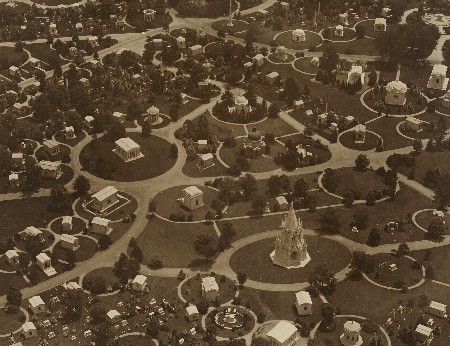
Melville's buried in the Bronx, at the tippy-top of both the 4 and the 2 lines. Either way you take the train all the way to the end and you're there. Which meant I could walk to a stop in Brooklyn, hop in, and about an hour and a half later I'd be at the place. Finding the actual gravesite might be a little trickier, as the cemetery is honkin huge (that's just a section of it), but that's later.


Let's set the scene. I head outside and it's a clear, cold day, a pretty much pitch perfect gray Winter day in Brooklyn--overcast, light wind, just enough to make the bare trees shiver and clack their branches, and cold without being freezing. You see your breath but it's not uncomfortable. So I decide to walk to the 4 train, which is just a little farther than the 2. As I walk I get more and more sensitized to my surroundings, and giddy. I'm going someplace in the city I've never been before! It's on my list of crap I tried to do for all of 2008 and now it's 2009 and this is a little belated but hell I'm doing it! A group of seagulls are all wingspread and circling overhead. I think it's a good sign. Then there's apprehension, as the Bronx isn't exactly pedestrian friendly--it was designed later, and for cars--and my worries I'll get lost, the weather will get awful fast, I'll get too chilly. Essentially I'm worried I'm too much of a little bitch, unworthy to visit the bones of a mighty sailor turned scribbler.

I go on anyway, and a train is just arriving. I've packed along with my trail mix and apple--this is the closest I get to a field trip in the city--a copy of Moby Dick, and while that may seem corny or hokey to some of you I don't care. I'll shout it from the rooftops: I'm a big dork! I heart books! I double heart books, especially ones that nobody reads but thinks they should or have had to in school and have since summarily forgotten!! In the spirit of Ishmael, I will revisit his sentiment that when some feel down in the mouth and rimed and hoary about their beards, they fall on the sword; I quietly take to graves. The new year hadn't brought me so much cheer, and I had already been not only delayed heavily by a visit to the post office, but completely thwarted by that institution in my efforts to pick up my package--in short, I was not a chipper whistling Popeye heading out for the spinach factory that day. But I walked onto that train, sat down, took a deep breath, and opened to the chapters called, in succession, the Chapel, the Pulpit, and the Sermon, being as they are concerned with deaths of whalemen and how to grieve for them.

As I mentioned, I was feeling pretty radiated, and the world inside had become quite bright whenever I looked up from my reading. I noticed an old white woman with dyed carrot-orange hair coiffured into a perfect almost pumpkin roundness around her head sit down across from me with a young beautiful girl. The girl had this perfect flat face--she was adopted, I guessed, and either from Vietnam or Laos, some place full of orphan cannibals in need of Christianizing--and darting almond eyes. Her nose looked stretched across like her ears formed the tips of the Y-shaped branch of a slingshot. She was bopping her legs against the underseat heater and yammering about 86th street, about how they were getting off at 86th street, right? The high-toned white woman--who had absolutely flabbergasting blue eyes, the color of the atlantic ocean--sighed and nodded and generally looked deflated with weariness and out of her league. I had just gotten to the part where Ishmael notices Queequeg in the chapel, solemnly listening to Father Mapple go on about Jonah with very little recognition (and later marking off every fifty pages of the Bible and grunting at the impressive weight and length of the tome he can't read). I dug back into the cenotaphs marking off dead sailors so their families would have somewhere to attach their grief, and Ishmael talking about you don't know how lucky you grievers of those who died on land have it, with the bones under the earth under your feet! For the misery of not knowing just where the dead have been lost is nearly unbearable, and the doubts it raised haunt the living endlessly, and prove that the dead are always with us, and that the past is a heavy ballast on our soaring soul balloons indeed. And Ishmael is telling us that there is great loneliness in living, and that the ocean doesn't lie about that, and Mapple's telling us, too, and both tell us their stories and observations and thoughts and tell us that these things have their meanings as well.

When the train pops up above ground and goes local at the leading edge of the Bronx, I hear the two fat women to my right say in West Indian accents that it's snowing. I look up from the book again and I think they're mistaken, that it's just foggy. Then I see that these are just waves of finely grained snowflakes blowing in almost perfect 45 degree unison. I start nervously eating my trail mix with its omega-3 fortified cranberries and pumpkin seeds it calls "Pepitas" because it's from Trader Joe's and they're hip like that.

When I get out of the station I'm looking right at the cemetery entrance, practically. And it's beautiful: I'm in a soft swirling snow globe, no bluster at all--just gentle mists of tiny snow all around. The air is still and quiet, and even the cars passing on the melted blacktop have muted tires. I hustle past the entrance gate, remembering quickly that the website mentioned maps in the security booth, and head to what looks like such a structure.

it's the bathroom. But it's cozily heated and I figure I better follow the "make sure you use the bathroom before a long trip--just try" rule, plus did i mention it's cozy and inviting and warm, even for an antiquated public bathroom? So I don't get my map but the experience is pleasant all the same, and when I get back outside I see a guy--the only other patron of the place I see the entire visit, it turns out--staring at what looks like a map behind glass.

And there it all is: a map and a legend to different plots, most of which are named after trees. I had looked up some info. beforehand and so knew Melville was located in the Catalpa plot, so I found that in the index, traced my fingers to I-7, and mapped a route to it from where I was. It was easy it turned out--just stay on central avenue--so i turned off the worried about what lies ahead part of my brain and just took it all in.

What glory! What meaningless testament to rotten flesh! There are entire what looks like villages dedicated to august stone mausoleums in here, all because some rich or prominent or both guy died. There's J.C. Penney, there's Reuter who started the news agency, there's Macy and Woolworth. All these etched giant names in greek pillared houses surrounded by ornated protector lions or acanthus leaves or planters or, Jesus, who knows? All locked up in what looks to be a vault-like mechanism and behind stacks of metal-screened doors--you get to the top of the marble steps and knock knock knock to lay your wreath down, but nobody's home. He been gone a long time, mister. So I walk on in the complete silence--only a rare pickup truck with a snowplow or a sudden burst of birds overhead or in the distance breaks it--and wonder where Miles Davis is buried.

Or Duke Ellington. They're both supposed to be there. I march on and am really grooving on the way the snow has tucked us all into its blanket and how restful death is when I get over a rise and see a greened-up old copper sign to my right: Catalpa. Next I gotta figure out how the frig I'm gonna pinpoint the exact grave. This is a bit nerve-wracking, as the plot is big and winding. But of course you can't quit this close; you can just get annoyed at yourself for not looking harder for a map you could take with you (because, as it turns out and I found out when I exited from the same gate on my return trip after seeing the grave, that the very map I looked at has important people's exact location within plots marked for easy finding. But our hero doesn't know that at this point in the story, because he's a big dumb idiot that doesn't notice important details until they cease to be relevant. Doh!); and you can march around at an ever quickening pace, peering in and squinting at the names on the headstones that a blind man could read from east Des Moines; and you can try to determine the system for how the graves are laid out, as though the dead cared about being organized, or the families of folks had died in chronological and sequential order in such a way as to yield a neatly alphabetical or oldest to newest progression, all so you, the casual visitor, could make your way that much easier past them to the one headstone you really care about.

But I knew what it looked like, so I persevered. I turned a corner, saw what looked like the grouping for W.C. Handy's clan, caught from across the way the sight of an unrolled scroll:

(I actually didn't bring a camera, so I'm grateful to this person's flickr pic for giving me something to share with you all. This seems to be taken in autumn, and so doesn't capture the silent cotton robing of the snow meadow, or the way the flakes nestled into the browned ivy skirt around the base. Too bad, but better than nothing.)


The grave is fairly unremarkable, in fact. Especially amid all the pomp and circumstance of the other big names. You could easily lose sight of this plainspoken puppy. Next to it, the cross, is his wife, Elizabeth Shaw Melville. Her name was covered in snow so I brushed a rectangle out for the "Melville" and the rainbow across the top for her first and middle names. Flanked on either side of the parents are their three kids, their daughter Bess next to their mother on the right, and the two sons, Malcolm and Stanwix, both of whom their parents outlived, next to Pops Herman off to the left. Stanwix's grave I have to guess at because the letters are worn clean off; he died young so it's the oldest of the graves, weirdly (and ghastly) enough.

On top of both Herman and Elizabeth's headstones are offerings of a kind. On the flat left part of her cross there's a neatly folded and faded old American flag under a rock, and a canister of that brand of sea salt, Bailene, with the whale on it, red fading to pink and banked up with a small mound of snow. It looks of a piece with the stone because the snow hides any separation. On the bigger surface area of his headstone there are more and more and still more rocks, along with some carefully and artfully placed twigs and acorns, all of which taken together forms a kind of nest. And the eggs in the nest? Pens. Tons and tons of pens, piled on top. It's breathtaking, and it choked me up a little to see--that and when I first walked up, saying Oh, God, oh, Wow, oh, my God.

It's overwhelming just to be there, and I get a little soft in the head. I start talking to the headstone like it's him, like Melville's still alive. I tell it I want to read it a story, and I read the section called the Castaway, as it's about deep-divers and coming back from long journeys not quite the same forever, and about being darkened but still the brightest, like polished ebony. I read it softly like I'm telling a secret, or like I'm trying not to wake the baby in the next room, and there's another guy--the second person I've seen--pushing a snowblower way off and making a muted machine sound that barely penetrates our soft little drama out here in the cold, with my cheeks puffing and red and my breath visible. I get done the section and tell the headstone thanks for that, deposit an apple core at the foot of a massive gaping oak tree next to the graves, and leave, still lonely but at least whole.

Tuesday, December 16, 2008

To me snow is bread mold growing on albino tree frogs.

"New York gets godawful cold in the winter but there's a whacky comradeship somewhere in some streets. LA is a jungle."-Kerouac, from On the Road

I'm walking to the train stop--the faraway half mile to get there one, not the three block away one--on wide Eastern Parkway with the rows of trees now bare so they look like giant brooms stuck upside down in the ground, and the sky's all gray and dismal and it's not really cold but you can see your breath anyway (I had joked earlier to Olivia that this was a day that made our surroundings look like /The Road/, which if you haven't read it is more or less about after the end of the human world with only a few survivors, constant nuclear winter and what not), and next thing there's ripped up toilet paper all around me. But wait--that's not Charmin, that's not charmin at all--someone wasn't yanking my chain: it was snow! Big ploppy wet snow that fell down in raggedy clumps and when I looked at it on the ground close seemed to be bread mold. Really fluffy soon melted stuff. And it's just started, and I'm walking, and I'm walking, and I'm not even to the three stops away train stop when it's like the whole environment, the buildings and the people with big bags full of Christmas gifts and their big ugg boots and even the cars and honking buses and emergency vehicles, all got wrapped up in this swirling whiteout. It looked and felt like a silent gentle apocalypse, like a plague of snowflakes (only I could equate giant snowflake clumps with tiny albino frogs falling from the sky).

Needless to say, I got my ass underground at the near stop and went on my way. When I popped up out of the Borough Hall stop, though, it was like magic: the big tree they have set up next to the fountain made its blue ornaments more twinkly in the soft light and the pine boughs wrapped around the pillars of the Hall were all frosted and glisteny. Today happens to be a market day, and the farmers at the stands I guess misjudged the weather or something, because they only had in most cases part of their vegetables and other things they're selling covered up. So you got these ultra shiny yellow and orange carrots and broccoli with snow tucked into its florets. Crazy stuff, looked like a field forgotten by harvest. And I'm bouncing around and really digging it because I'm still kind of romantic about snow since moving back east from california and only seeing a couple real snow storms here in New York, noticing how one stand left all its wreaths and boughs and assorted evergreen decorations and pinecone wares out in the snow and how perfect a picture it made, how much sense it made to see the needles all flecked with what was quickly becoming transparent water from opaque white snow, and opening up again the spaces between the branches and needles to air rather than a visible and palpable network of plant and snow matter, then moving down the line to Barnes and Noble and stopping to watch as a complicated human architecture coordinates itself at the front door to allow for a stroller and an old man more horizontal and vertical in a walker get respective out and into the store, and me participating, too, and finding a role somehow, making myself a cog, among all the shaken out hair and wet dripping umbrellas and everyone just getting through, so that even the normally terrifying flourescence and obscene volume of BN's interior (that for horror effect must be experienced alongside the silent efficiency of cashiers not talking to customers, and customers not talking to each other, and everyone just kind of solitary and flipping and not in a warm browsing way but somehow mutated by the surroundings into these pale parasitic ravenous shoppers, desperate to get Uncle Fred's or cousin Annie's bratty twin children out of the way and crossed off the list, no matter how many elbows they have to throw to get there)--even my normal gut reaction of recoil subsides and I can wade through it all like a proud masthead in the arctic fog that hides icebergs.

Then I check out, and the guy--I think his name was "Greg" although it was hard to see his nametag from behind his sagging droopy chin--doesn't acknowledge me, and I go to Trader Joe's, and an old lady bites my heels with her cart, and the same thing happens at the checkout, except the dude sort of acknowledges me with a slight nod, then I get to the little gourmet place across the street and this time not only does the Polish lady cashier ignore me as anything but something to be processed, but doesn't miss a beat in her conversation being held in Polish with the guy on the side of the counter who I practically have to maul with excuses me to get past and out the door.

And I'm outside and the snow has slaked, and stops, and all that's left is trash running into storm drains from the streamcurrent of filthy slop water glowing with the rainbow of chemical runoff. But there's still a hush in that air as I walk back to the subway. And the smells: something about snow in the air punctuates smells for me. The turmeric coming out of the halal food huts jabs my attention--I see a tall man under an umbrella on hold on his cell phone walk up, "What's up, man? Yeah, I'll have a chicken and lamb with rice"--just in time to see the guy inside the cart disappear behind a sudden gushing cloud of steam as you hear whooosh! Of chicken going on the flat grill. Then I get the charcoal and the crusty smell of the pretzels and the kind of gross but also weirdly appealing aroma of the steam that collects under the storage tray for the hot dogs--that unmistakable whiff of boiled tight pigskin. I'm not even that hungry, either; it's just overwhelming in this particular atmospheric condition. I raft back home on the smells rather than the empty milk containers and cigarette packs that remind me to be careful where I step if I don't want soggy feet and think to myself how it just goes to show you: New York's the kind of place where in the morning you can praise with abandon the mass transit and other public services and find out by that night on the local news that a sanitation worker had been shot a block and a half from your apartment and a bus driver stabbed to death in your old neighborhood for trying to collect a fare from a rider. Now /that's/ America!

Saturday, December 13, 2008

Me off Potatoes

I had another one to post earlier today with the heading "Notes on America," but summarily forgot its contents, and now I'm sitting here watching Westside Story and thinking about how I've been trying not to eat potatoes--or at least not so MUCH of them--especially as winter comes. I blame Westside Story...for all of it: my food freakiness, my forgetfulness. The economy...

Moving on. Did you know that the primary source of Vitamin C for Americans is potatoes? Yep. Alex Trebek told me so. And ever since I heard that as the Final Jeopardy clue I've been thinking about my potato intake. Because I remember thinking (after, "Damn, not what is orange juice?), "Man, I /do/ eat a lot of potatoes." And while corn people is the single biggest thing we are, we've got spuds pretty well covered, too, such that I imagine our legs and arms and torso made of cobears, and our faceparts and ears and hands and fingers and toes and feet made out of potatoes. And since I was trying to stretch out and consider the fact that maybe it might be better for my body and my mind and all of it if I don't eat the same fucking thing every day of life on Earth. And because, well, why not? I like to cook and I like to challenge my skillz in culinary town. Because of all these things and more I can't remember but mostly Final Jeopardy and the fact I got it wrong, I decided to see what else I could eat when tomatoes weren't growing and asparagus wasn't here while still eating at least mostly seasonally and if possible locally (this is a barrel of goddamned monkeys once February rolls around in New York).

Part of this included eating different kinds of potatoes. You know, as a treat. Fingerlings generally had not been a revelation for awhile, but now there were like forty kinds. I tried Russian Banana, Ruby Crescent, Pink Thumb, Rose Finn, French, La Ratte (which look like the rat king apparently when they're all bunched up), and these purple knuckler things. They were OK, but mostly just expensive when all you really need to do is buy new (or small) potatoes to get the same effect. But if you wanna try em I'd say stick with anything yellow (Russian Banana or La Ratte), rather than the pink and blue and purple ones. The consistency on these last are just too annoying to work with, and come out gummy when you roast them, when roasting is really the only thing worth doing (buying tiny adorable segmented potatoes at three bucks a pound in order to boil and mash them will result in me showing up at your house and beating you with a turkey baster). Either that or when it's warm they make good potato salad.

Among regular potatoes, oh Jesus--don't get me started. There's German butterball, Caribe, Bintje, Adirondack Blue, Purple Peruvian, Carola, Kennebec, Norland, and then the common Yukon Gold, Red Bliss and Russet (or Idaho). For mashing or potato salad I like butterballs or Carolas, for french fries, gnocchi or baked potatoes I like kennebecs and the blue and purple ones, but really the Yukon Gold and the Russets I found work just as well in these respective categories. For boiling and potato salad I like any red skinned ones.

So, yeah, I still screw around with different kinds, but the only real difference I'm finding is one I already knew, namely, that some are starchy, some are waxy, and some are halfway between the two (the all-purpose ones, like Kennebec or Yukon Gold). They all taste pretty much the same, with one exception: blue and purple potatoes taste really nutty. That's the only word for it: nutty. Not like loco, like walnuts. They're good, but distinct. I actually like them best for french fries.

This wasn't enough, isn't enough, variety for me, though. I am a variety whore, it would seem. Or maybe it's just because I'm obsessive about going to the Farmer's Market for my food and the produce you get int he winter all comes out of the ground. This really, erm, /encourages/ creativity. I'm still trying to figure out turnips. So far I can do a soup with them and this thing with butternut squash and sesame seeds and leeks, like I half sautee half bake in the overn dealie. But that's about it. I suck at turnips. I make a really good rutabaga mash with thyme and roasted pears, but turnips have conquered me so far.

What I am pretty good at and like a lot, besides the obvious potato alternative carrot and its nine thousand possibilities (soup, side dish, roasting buddy--I've even made carrot gnocchi once), are the following:

Celery root. This shit is CRAZY. By far the homeliest, wartiest of the root vegetables, the ugliest of any vegetable, possibly. This is the troll, this is the toad, of the vegetable world. The skin is all nubby and brown and difficult to peel. There are cracks and crevices around the nodes at the bottom of the root that trap dirt, too, which is good times. But once you're done you find these creamy, aromatic white flesh (it smells and tastes like a cross between celery and spud). You can treat just like a potato. It's great in a cream of type soup, and my favorite recipe simply boils it with peas and then tosses it up with some shallots sauteed in butter. Plus I guess it's good for you, with calcium and minerals you don't see often in high quantities in veggies.

Parsnips. These aren't all that exotic, but I've been playing with them, trying to figure out how to prepare them in a way that doesn't act like they are bizarro, albino carrots. There's a soup I make with leeks and dried porcini mushrooms (you soak em in hot water to make a sort of broth) that's thickened with chestnuts to make it creamy that works well. I've experimented with mashing or food processing it instead of mashed potatoes. I wouldn't pay this one forward to any of you, as it comes out the consistency approximately of Elmer's glue. Maybe if I thinned it with milk or something? (I did use a shit ton of butter, but that didn't help)

Beets. I grew up on beets in New England, but have recently rediscovered them. Candy cane, Chioggia (my favorite), the regular deep purple red ones. The best thing about beets is you can use the tops for stuff--I sautee them for either a side like spinach, to put under fish or something, or to use in a pasta dish with anchovies garlic and hot red pepper. But the tuber part kicks ass. I actually don't do much with beets--I treat them like squash. And besides borscht, which I don't know how to make, I can't think of anything that really incorporates beets. But that doesnt' stop me from roasting them for like a week and slicing them up with some rosemary and parmigiano and drizzled olive oil (winter bruschetta). They also work pretty well puree with some ricotta as filling for ravioli that you serve with poppy seeds cooked in butter (stole this dish from a restaurant in Brooklyn. It's an Italian restaurant. Seriously.) Mostly just on their own roasted beets are fan freakin tastic, and I try to integrate the tops and roasted root together.

Parsley root--this one's tricky. I like to think it's the most shy of all root vegetables. There's only one thing I've found I can do with it that doesn't suck. Once it's cooked and turns into semi-mushy starch, you can make it into a soup easily. The taste is super mellow, with parsley and potato and celery undertones, and delicate. Plus you can get your rocks off knowing, as with celery root, you're using the /whole/ friggin plant (unlike celery root, however, I've seen a massive punch of parsley sold with the root attached).

Leeks--not really a root vegetable, but I'm finding out just how versatile they are. They're part of my "substitute for onions" campaign, which also includes shallots, since I didn't really know how to cook with either of these non-onion oniony tasting things.

Another thing I've noticed happening is that the fewer potatoes I use the more I branch out in the "vegetable" category of the "meat, potato, vegetable" model (I don't always follow this model, but if you've got a mess of pork chops or steak that makes you drool just looking at it, why be anti- just for the sake of being anti-?). The two areas I've mainly explored are cruciferous vegetables--I've always eaten broccoli but now I play with cauliflower, brussels sprouts, and even and especially cabbage, which, who knew? Also has a burlapsackful of Vitamin C in it and God knows what other good crap for you--and squash--started with butternut but found I like all these nutty--like loco,, not like walnuts--Japanese varieties whose names except for Hokkaido I can't remember, Acorn, Kabocha, Delicata (a whole lot, one of my favorites), Carnival, Sweet Dumpling, Hubbard, Cheese Pumpkin, even the Jack-O-Lantern sugar pumpkin is good eatin', I found out.

But I'll get into all these non-root vegetable potato distractions later, as they fit better under the category of "fall seasonal" post than "how I broke my potato habit." Let me finish, though, by saying that, despite all the wonderful other flavors from food you can pull out of dirt, and all the cool new recipes I now have under the belt buckle, I still love me some potato. I in fact love it MORE now, I think, as I've started doing things like make my own french fries when I get a good steak (this combination may be completely unbeatable when paired with a high-end Belgian beer). It's weird, once I got healthy-like with the widening my food spectrum into stereo sound and abandoned the mono-tuber eating, I wound up eating potatoes with worrying so much about how they aren't all that good for me. Turns out spuds get a bum rap, and that the blue ones and purples ones have exactly the same antioxidants as blueberries or blackberries that they look so much like and people are so frantic about (the skins of all potatoes are where most of the nutrition lies, I found out, which is why "clean" mashed potatoes and most french fries from restaurants aren't all that great for you, being just empty starch). My attitude coming out of my little experiment is pretty basic: any food, if you drench it in grease and other garbage that in excess kills you and fry it up after dehydrating and flash-freezing it and more or less turning it into something you can eat but can't really call food anymore, is gonna be bad for you. It's a problem. But that's not the potato's fault--it just happens to be one of the only things on Earth that we can digest that will tolerate such treatment.

I used to hold the belief, and to share it with anyone who would listen, that "a potato was barely a vegetable." Now I think that's only true after we get done with it far too often, as in the case of what I call "french fry vegetarians," those wonderful hypocrites who weep at the thought of a feedlot cow or their grandchildren living in a world without polar bears and seasons and promptly get into a fast food line to be processed single file and served food their gut can't digest like the corn in that sad cow with other cow's shit on its fur's stomach, or who buy frozen dinners from Whole Foods or Trader Joe's that are packed with sodium and not much else and have been processed(manufactured, really) in the same industrial model Purdue or supermarket ground beef uses to supply these folks' heartless carnivore cousins. Nothing dies for a frozen dinner of daal, granted, but damn if those frozen veggies didn't come from a massive farm, growing in soil packed with petroleum-based fertilizer and unless you live in California trucked in from another coastline on diesel fuel. Drowning polar bears anyone? mmmmmm. yummy. And so ethical!

And this last paragraph is proof positive why I should never, ever do any grocery shopping on the weekends here. I see far too many of these people, and a perfectly harmless blog post turns into a piranha feeding frenzy I subject you all to. Sorry for the blood in the water, and for rambling. I'll be back at you all soon.

Tuesday, December 9, 2008

I'm thinking about the machines.

This is something I've been meaning to write for a while now, but have been too busy and drained from personal events I will not now go into to get down. In fact, if and when I do get back into a regular routine with this posting stuff what you read will pretty much all fall into the category of "majorly delayed." So here we are, back to cooking and food related musings--

The last recommendation I ventured forth and shared food-wise was to buy less more expensive food. This is more or less blasphemy in our culture, in that it in effect is saying "pay more to get less" when we are possessed by the need of getting "value" in the form of "more stuff for less money." That's fine, I would argue, with things you don't put into your body (although one has to question the notion of "value" when it's completely divested of the notion of "quality." Is thirteen pounds of animal-grade pigshit worth a nickel when the other guy is selling sub-animal-grade human sewage, same quantity for a dime? Sadly, folks, I think most of our decision making has entered this realm, when what it might be time to do is dismiss ourselves to recess and politely say, "Um, I don't want any shit. Thanks anyway. I'm going to play on the monkeybars now."); but when it comes to things you do put in your body, that you try to digest, there's more at stake here than simply how much it costs or, even more importantly, how much you get.

Now, the first objection I see being raised to my eat less and pay more for it argument is the whole mother of eight who may or may not be an immigrant and is trying to put dinner on the table each and every night on almost no income. I'll get to this objection in a minute, as it's a valid point and more or less vocalizes the single biggest argument FOR our current industrial food system--namely, that it's a triumph of being able to feed a huge number of people for not much money, which of course means nobody's going hungry in our country and we're all healthy. I hope you can sniff the faint whiff of ozone as the bullshit meter just starting smoking after blowing all its fuses on the end of that last sentence. But more in a minute.

First, I need to share my big machine metaphor, which isn't much of one as metaphors go but it'll work. I see the human body, all human bodies, mine, yours, your friends' and families', as a big, beautiful chugga-chugga machine, complete with cogs and specialized parts that do different things, and most importantly, with the need for fuel. All machines need something--whether it's gas or electricity or whatever--to make them go. And all machines use that something, that fuel, by transforming it into something else, often with a waste or other byproducts (in our case we poop and pee and generate energy, mainly in the form of heat but also metabolic activities we need to keep running). And, to my mind, the question with the human body machine remains the simple one of, "How much output are you getting for your fuel?" With all this hyperactivity about gas mileage in recent months and years, we ought to ask ourselves what our fuel efficiency rating is.

This means defining our gallon of gas, our fuel unit. For human fuel that would be the calorie. Everything you eat (not drink, because water has none), whether it's protein, fat, or cabohydrate based, vitamin and mineral loaded or not, has calories in it. Your body needs these calories to keep going, but only so many (can't remember exactly where we're at now but I think the recommendation is around 2,000-2,500). After that we start storing the fuel as fat, and our machine gets kinda bloated and porky-acting. Imagine a car with deposits of fuel sludge all over the place, or, better yet, imagine a whole tangle of cars being used with only one driver in each and creating an atmosphere that chokes the drivers to death along with all other life on Earth. Come to think of it, you don't really have to imagine that so much as look around.

So, yeah, we need calories, a certain number to keep going, but with a maximum limit. The question, then, becomes, how much bang are you getting for your buck? /Here/ is where we should be asking value questions, here is where and how we should be defining value anew. By asking ourselves, what am I getting for each calorie I intake? For example, I eat a bowl of McCann's Irish Oatmeal, which just means the oats are steel cut, or whacked into little pieces rather than rolled like that Quaker Wilfred Brimley's. I eat approximately a quarter cup of it a day with a cup of water, often with apples or raisins and walnuts in it. The oatmeal itself has 120 calories. Add in about 30 calories for the added fruit--without sugar, which would jack the total considerably more than 30--and you've got 150 calories total. But more importantly, let's ask ourselves: what did I get for it? Well, I got full, mainly, as I don't usually want to eat anything but these 150 calories for about four more hours. Compare this to when I eat breakfast cereal, like Life that Mikey likes so much. Now, Life has about the same calorie content--not to mention all those /awesome/ enrichments of Riboflavin and Folic Acid and Vitamin B12 and what not--but the thing is, when I eat a bowl of Life with milk, which adds more calories than the pat of butter I eat with the oatmeal I forgot to tell you about earlier--oops--then I'm hungry in like an hour and a half.

But isn't it worth it on the whole? I mean, what /else/ do you get from this lumpy porridge gruel looking crap that's the consistency of bread dough? Let's see. Looking on the label...well, not much. Some protein, a shit ton of dietary fiber--about a quarter of your daily recommended allowance--but overall our "Nutrition Facts" tell us it doesn't have any of that snazzy vitamin B12 and Riboflavin I've heard so much about and that Mikey likes. But here's the thing: those things don't /belong/ in oatmeal, or cereal made from oats like Life. A little bit of protein and a whole lot of dietary fiber, both of which, it turns out, are necessary to keep me full and are lacking from Life, are what belong in oats--like the plant oats. Like if you started chewing on some grain, its "Nutrition Facts" would be much closer to McCann's than Life.

And now more questions arise, the two most prominent being intertwined, it turns out. First, what about the enriched contents of Life, all the snazzy stuff they added later at the cereal's processing plant (a factory preparing things for your little factory)? And second, where's the beef, so to speak: where'd the dietary fiber and protein I'd need to stay full on Life /go/? Because it's not there. I've looked. The carbohydrates, instead of coming from complex sources like the much lauded "whole grain"--which is to say, more like the oat plant than like the lattice work square floating in milk--are coming in at least equal measure (more in sugary cereal) from sugars, or what the cheap beer world calls "adjuncts." Invariably the sugar of choice is high fructose corn syrup, which is a refined version of another grain, corn. So what we're faced with here is a breakfast cereal, and Life is by no means an exception, that, in being created, had the stuff it was born with, fiber and protein and whatever else on a micro-level. stripped away or at least leeched out in processing (which ultimately just "stretches" the amount of oats you need so that you need less grain to make something you somehow still call cereal), and then replaced first by a variety of isolated vitamins and minerals somehow chemically implanted into the processed oats and had its carbohydrate structure reconstituted with, not just sugar, a simpler carb., but a /form of sugar derived from another grain/.

At this point you may ask yourself as I can't help asking myself again, what the fuck is going on here? This makes almost no sense. It's simple, really: corn's cheap. Sugar's actually cheaper to make in the form of corn syrup than simply growing oats in a field, drying them out, and hacking them up with rotary steel blades like they do in the county in Ireland where McCann's comes from. Somehow the chemistry mechanism whereby foods are "enriched" is also now cheaper. I have no idea how this happened, or at least not a full understanding, but let me assure you of one thing: it does not have to be this way. Just because the current apparatus makes it looks like this is what grain should be, it is absolutely ludicrous to think that the only way to make food cheap is to make it cheaply, in a processed and refined and mostly nutrition-free form (while I can't prove that the enriched Vitamins and Minerals in these cereals are not absorbed by your body, I can tell you that increasingly the same food science that brought us Yellow No. 5 is also researching and revealing how closely linked the absorption of nutritive elements like vitamins, minerals, and those precious darling antioxidants, is to the food in which those nutritive elements appear in nature, whole. In other words, you can't take a blueberry extract capsule and absorb the good stuff from it; you have to eat a blueberry. Which means you can't just eat Total or Life and expect those "Nutrition Facts" percentages of your daily recommended amount of Folic Acid to be met. It is increasingly coming to light, sadly, that this is a lie. That's life, Mikey). Unfortunately, we're locked into a logic whereby we think 'good food'--i.e. food that doesn't make us fat and sad and full of Wilfred Brimley-hates it die-uh-beatus of the type II variety--costs a lot, and that Hilda the eight children rearing mother can't bring her kids up on anything but dollar ninety-nine a lb. feedlot beef and Life cereal, because McCann's costs 5.29 for a little metal barrel of it (grass-fed ground beef, which is to say beef from cows eating what they are /genetically designed to eat/, costs much much more than corn-fed feedlot beef).

But here's the thing. Go back to that description of what I eat for breakfast. A quarter cup of McCann's. That's even /less/ than the "serving size" of most breakfast cereals, ignoring of course the fact that we usually eat twice that serving size, and thus get twice as many calories for half as much other nutritive elements we need in the course of a day. I get a tin of McCann's every two weeks, sometimes every three. You do the math, you determine the value. Get more, pay more, and eat less, and maybe, eventually, our consumer choices will drive an agriculture in this country that when described in plain and open terms can only be labeled insane. It's possible. There's absolutely nothing that says we must have the Great Plains full of corn except the farm bill's glut of subsidies. We could keep the subsidies so the farmers don't lost their shirts, just redirecting them to different products.

But that's a different recommendation for a different day. For now, just eat less and pay more--a quarter pound of grass-fed filet mignon tastes so god damned much like real beef, and is so rich and buttery and absolutely decadent while still tasting like a real animal that hasn't been pumped full of drugs and feed a grain it doesn't know how to digest, that you'll not only feel better in your conscience, you'll be much fuller, too, and much fuller of the good fat, Omega-3, so many folks are popping fish oil pills of, than the Omega-6 overflow of, say, a Whopper. Sick cows make for sick people, and frankenfoodfactories produce products, not food (breakfast cereal is a created commodity; there's absolutely no reason we need nine hundred varieties of a combination of corn, rice, oats, and wheat). That product may seem cheap, but like that black market Mexican or Venezuelan gas with the 60 octane rating, it'll break your machine.

PS--Just as a footnote the food science regarding the connections between nutritive elements and whole foods has been discussed by Michael Pollan in /In Defense of Food/--can't remember where specifically, but, like Prego, it's in there.